ABOUT THE PROJECT
Maize is the most widely grown food crop in Africa with more than 300 million people depending on it as their main food source. Its production is however severely affected by drought and insect-pests, which negatively impact yields leading to crop failure, hunger and poverty. Identifying ways to mitigate drought risk, stabilize yields, and encourage small-scale farmers to adopt best management practices is fundamental to realizing food security and improved livelihoods for the continent.
Through the support of the Bill and Melinda Gates Foundation and the United States Agency for International Development, AATF is leading the TELA Maize Project, a public-private partnership that is addressing the problem of drought in maize and destructive insects specifically stemborers and fall armyworm. Stemborers reduce maize production in several countries in Africa; and in Kenya alone, this loss averages 13% or 400,000 tonnes per year equivalent to USD 90 million. Similarly, projections estimate that the Fall Armyworm could destroy up to 20 million metric tons of maize in Africa each year, enough to feed 100 million people. The TELA Project is working towards commercialisation of transgenic drought-tolerant and insect-protected maize varieties to enhance food security in Sub-Saharan Africa.
The word ‘TELA’ is derived from the Latin word TUTELA which means ‘Protection’.The TELA Maize Project builds on progress made from a decade of excellent breeding work under the Water Efficient Maize for Africa (WEMA) Project. The TELA Maize Project is currently implemented in 7 countries – Ethiopia, Kenya, Mozambique, Nigeria, South Africa, Tanzania and Uganda.
AATF PROJECTS
TELA Maize
LEARN MORETAAT Maize
LEARN MORETAAT Policy Enabler
LEARN MORECowpea Project
LEARN MOREMLN Project
LEARN MORECAMAP Project
LEARN MOREOUR CONTRIBUTION

Increase maize productivity in Africa whilst creating employment opportunities for women and youth.

Increasing uptake and use of proven high-yielding climate-smart maize technologies by smallholder farmers in Sub-Saharan Africa.

“We will be judged by the Commitment and Actions we take today to enable farmers access seeds and markets for improved livelihoods” – Dr. Martin Fregene – AfDB Agriculture Director
PROJECT BENEFIT

FARMERS
Smallholder farmers using TAAT Maize Compact will increase maize roductivity by at least 30%. This goes a long way in enhancing the efforts of food security in Africa.

BUSINESSES
Farmers in commercial agriculture will enhance income by at least 20%. The extra income will improve the quality of life especially commercial farmers in rural areas.

SOCIETY
With the enhanced commercialization prospects of TAAT Maize Compact, women and the youth will get employment by participating along the maize value chain.
PROJECT HIGHLIGHTS

5
Number of TELA varieties released to date

48+
permits approvals secured to facilitate testing and environmental release of transgenic products

50%
yield advantage of TELA varieties during trials relative to non-transgenic varieties due to insect protection

5
Number of households to benefit from 113 tons of TELA maize in South Africa
FIELD & IMPACT STORIES

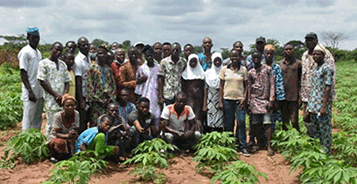

Removing drudgery from cassava farming – success for farmer Stephania Kunda in Zambia
Continue reading
Need more info on this?
Get in touch with us for more information.
Fill out the contact request form & we'll get back to you.

PROJECT PARTNERS




INFORMATION AND RESOURCES
PROJECT MANAGEMENT
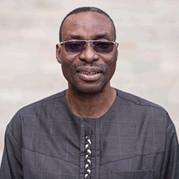
Sylvester Oikeh
Project Manager
S.Oikeh@aatf-africa.org
PROJECT INVESTORS

Bill and Melinda Gates Foundation supports the TELA, Open Forum on Agricultural Biotechnology in Africa, QBS, the Hybrid Rice: Breeding by Design projects and has contributed to integrating IT into CAMAP. The Foundation previously supported the WEMA project and also provided core funding for organizational operational support.
The United States Agency for International Development (USAID), one of the original funders of AATF, supports the Nitrogen-Use Efficient, Water-Use Efficient, Salt-Tolerant Rice Project; Pod-Borer Resistant Cowpea Project; and the Water Efficient Maize for Africa project. USAID supports the MLN Diagnostics and Management Project through CIMMYT. USAID also supported the Striga Control in Maize project as part of the US government’s Feed the Future initiative.

254-20 422 3700

Naivasha Rd

aatf@aatf-africa.org